Research Paper
Promoting Ecocentric Over Anthropocentric Values in a Built Environment Through Environmental Education
A research paper by Wonne Afronelly O. and Dennis Ejike Amadi on how environmental education and stakeholder synergy can shift built-environment practice from human-centred to nature-centred values.
Date
2016
Location
Port Harcourt, Nigeria
Facilitator
Wonne Afronelly O. & Dennis Ejike Amadi
Partners
Abstract
Summary of the paper
This paper brings to the fore the key concepts that promote ecocentric values within the built environment. It argues that a strong synergy between built-environment professionals, government, media, educational institutions, corporate bodies and local communities — delivered through environmental education (EE) — is the foundation for shifting practice from anthropocentric to ecocentric values. Drawing on Leopold (1949), Banham's categorisation, ecocentric CSR theory and an analysis of broadcast media stations promoting environmental education in Port Harcourt, the authors offer concrete recommendations for schools, professionals, regulators and firms.
Objectives
Goals for this work
- Define ecocentrism, anthropocentrism, environmental ethics, stakeholders and synergy in the built-environment context.
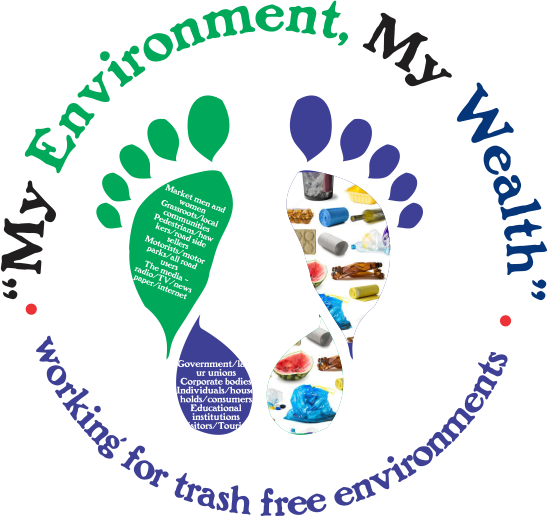
- Map the ten stakeholder categories who need — and who proffer — environmental education.
- Assess the role of Port Harcourt broadcast media in promoting environmental education.
- Frame ecocentric CSR as a tool for built-environment professionals (PLACE).
- Recommend policy and curriculum reforms for built-environment courses and regulators.
Outcomes
What changed because of this work
- Identified ten stakeholder categories whose synergy is required for ecocentric practice.
- Documented that Radio Rivers (26.1%) and Nigeria Info (21.7%) lead environmental-education broadcasting in Port Harcourt.
- Framed ecocentric CSR as a primary core value for built-environment business, distinct from human-centred sustainability.
- Established trees and green spaces as a non-negotiable criterion for liveable urban development.
Recommendations
Where we go from here
- Establish environment clubs in schools at all levels — formal and informal.
- Incorporate public speaking and rural-extension training into built-environment courses (architecture, urban planning).
- Use visual broadcast media for short skits highlighting tree planting and conservation.
- Set up community radio stations broadcasting in local dialects to guide infrastructural development in fast-growing rural towns.
- Mandate tree planting and green spaces as criteria for building and property development design approvals.
- Restrict bank lending and corporate CSR to projects that demonstrably preserve the environment.
- Encourage community policing by all built-environment professionals to actualise an ecocentric society.
Read the full paper
Preview the document inline, or download the PowerPoint.